Magna Carta
Ancient seed of modern freedom
Exploring justice, rights, and human dignity
Welcome to your journey through history
Imagine a world where the most powerful person—the king—could change rules at will, take property, or imprison people without cause. In 1215, a group of nobles confronted this, forcing King John to accept limits on his power. Their agreement, sealed at Runnymede, became a turning point in the story of law and liberty.
That document is the Magna Carta. Its legacy is one of courage, faith, and the conviction that all people have dignity because we are made in the Image of God (Imago Dei). It started as a peace treaty, but it grew into a foundation of the rule of law.
Unit goal: See how a medieval charter helped shape modern democracy, human rights, and Catholic Social Teaching—and how these ideas guide our lives today.
🎣 Hook: The “unfair principal” scenario
Imagine walking into school and hearing: “New rule: give your lunch money for my office chair. Complain and you’re suspended. I make and change rules at any time.”
- How does this make you feel?
- Is this fair? Why or why not?
- If all students banded together, what could you do?
Why tension rose under King John
King John (1199–1216): power problems
- Heavy taxes: Costly wars in France (losing lands like Normandy) drove aggressive taxation without consent.
- Unfair justice: Imprisonment and penalties used to punish enemies rather than uphold law.
- Church conflict: Disputes with the Pope over appointments and property damaged trust.
- Property seizures: Nobles saw lands and rights violated—fueling rebellion.
Divine right of kings vs. higher law
Monarchs claimed authority from God to rule absolutely. Magna Carta pushed back—asserting that even kings must obey the law. This idea echoes a higher moral law above human rulers.
The barons rebel
Barons assemble forces, take London, and demand reforms. John must negotiate to avoid civil war.
Runnymede agreement
At a meadow by the Thames, the king seals the “Great Charter,” promising defined limits and protections.
Annulment and reissue
Pope Innocent III annuls the charter; the First Barons’ War erupts. Later kings reissue and confirm it, including statute confirmation under Edward I in 1297.
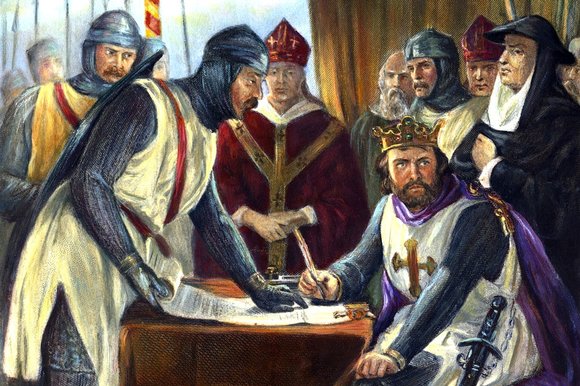
King John affixes his seal at Runnymede, June 15, 1215
Key figures
King John
- Role: Monarch of England
- Challenge: Fiscal crisis and distrust
- Belief: Divine right and royal prerogative
- Outcome: Forced to accept legal limits
Rebel barons
- Leader: Robert Fitzwalter
- Goal: Protect feudal rights and limit abuse
- Method: Collective action and negotiation backed by force
- Legacy: Enforcement council of 25 barons
Stephen Langton
- Office: Archbishop of Canterbury
- Role: Mediator, moral voice, and drafter
- Impact: Clause 1—freedom of the English Church
- Legacy: Framed royal limits as moral-legal necessity
Activity: Historical social profile
Create a “profile” for two figures: JohnLackland, BaronLeader, ArchbishopLangton
- Two lines describing who they are and what they seek
- Reaction to the Runnymede agreement
- Three values (e.g., Justice RuleOfLaw Dignity)
📜 Lab: AI vs. The Great Charter
Can modern Artificial Intelligence decode a 13th-century manuscript? In this exercise, we will test the limits of Computer Vision and OCR technology using a reissue of the Magna Carta.
-
1The Benchmarking: Upload this image to four different AIs (e.g., ACRSS Personal AI Agent, ChatGPT, Claude, and Gemini).
-
2The Extraction: Ask the AI to transcribe the first three lines (or more) of Latin and translate the famous "Clause 29."
-
3The Evaluation: Compare the results. Which AI hallucinated (made things up) and which stayed true to the ink?
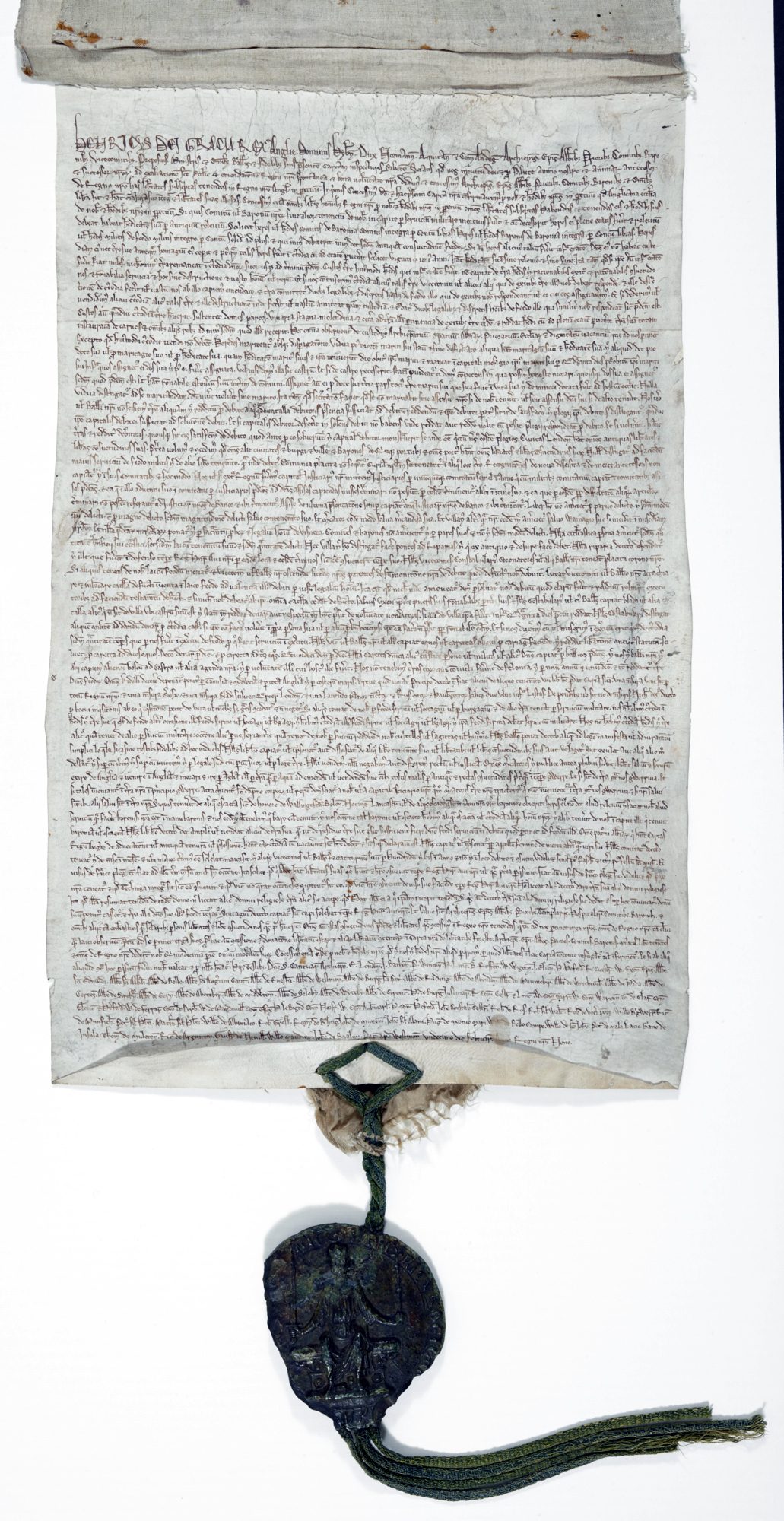
Magna Carta manuscript: Latin text on sheepskin parchment.
For P. Sabbagh, Courtesy British Library, Cotton MS Augustus II.106
What the charter established
Magna Carta contained 63 clauses. Many addressed medieval feudal customs, but several introduced enduring principles:
Rule of law
No one, not even the king, is above the law. Authority is accountable to agreed legal standards.
Trial by lawful judgment
Clause 39: “No free man shall be seized or imprisoned… except by the lawful judgment of his equals or by the law of the land.” This seeds fair trials.
Due process & habeas corpus
Government must follow proper procedures before taking liberty or property, anticipating protection from unlawful detention.
Clause detective
| Clause | Text (simplified) | Meaning | Modern echo |
|---|---|---|---|
| 1 | “The English Church shall be free… with its rights and liberties unimpaired.” | Religious independence from royal control | Religious freedom protections |
| 12 | No new taxes (scutage/aid) without common counsel | Consent required for taxation | “No taxation without representation” |
| 20 | Fines must fit the offense | Proportional punishment | Limits on excessive fines/punishment |
| 39 | Lawful judgment required for arrest or imprisonment | Fair trial and due process | Procedural justice rights |
| 40 | “To no one will we deny or delay right or justice.” | Accessible, timely justice | Right to a speedy trial |
Before and after
Before Magna Carta
- King could arrest without cause
- King could impose taxes unilaterally
- Justice could be denied or sold
- Royal authority was above law
- Church subject to royal interference
After Magna Carta
- Lawful judgment required for detention
- Taxes require consent
- Justice must be accessible and timely
- King bound by law
- Freedom of the Church recognized
The Church’s role
- Stephen Langton: As Archbishop of Canterbury, he mediated and helped draft the charter, aligning reforms with moral law.
- Clause 1: Guarantees freedom of the English Church—signaling respect for spiritual authority and conscience.
- Papal annulment & reissues: Though Innocent III annulled the charter, later kings reissued it—its moral force endured.
- Moral accountability: The Church reminded rulers that authority is stewardship under God, not absolute domination.
Where do rights come from?
If rights come from government
- They can be taken away
- They shift with leaders
- They become privileges, not protections
If rights come from God
- They are inalienable
- They apply equally to all people
- They bind rulers to higher moral law
Imago Dei — Image of God
Genesis 1:27
“So God created mankind in his own image, in the image of God he created them; male and female he created them.”
— Genesis 1:27
- Inherent dignity: Each person’s worth is not earned—it is given by God.
- Equality: No one’s dignity outranks another’s.
- God-given rights: Rights precede government and limit it.
- Universal scope: Applies to every human being.
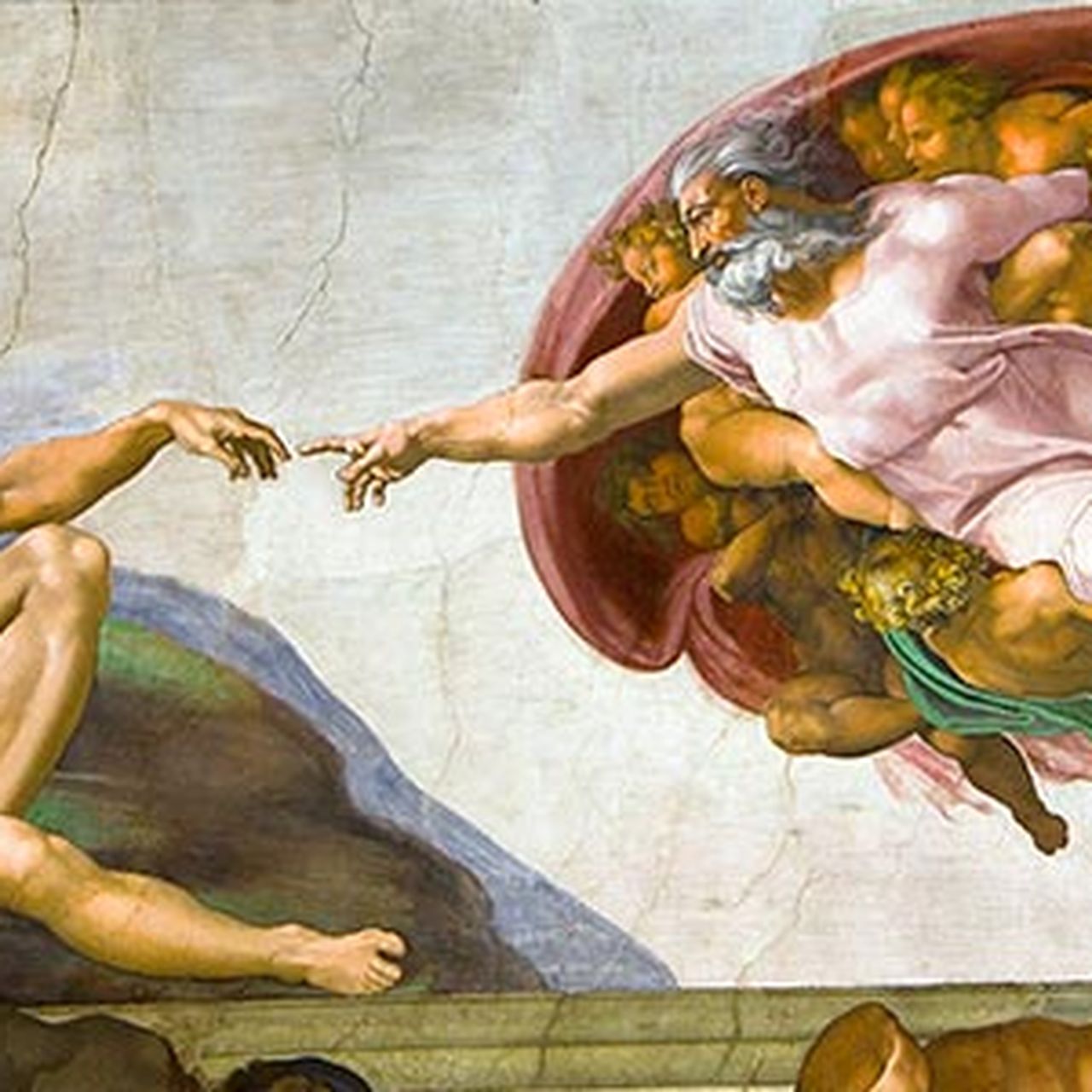
Imago Dei: the theological foundation beneath human rights
Connecting faith and law
Key connections
- Higher moral law: Even rulers must submit to moral truth.
- Rule of law: Legal limits reflect justice, not mere power.
- Human dignity: Legal protections guard God-given worth.
- Shared responsibility: Consent for taxation serves the common good.
Catholic Social Teaching
“The dignity of the human person is rooted in his or her creation in the image and likeness of God.”
— Catechism of the Catholic Church, 1700
- Life is sacred: From conception to natural death.
- Rational soul: Capacity to know, love, and choose the good.
- Justice: Institutions should advance the common good.
- Solidarity: We protect others’ dignity as we protect our own.
The architecture of rights
Picture a building: the roof is civil freedoms, the pillars are due process and rule of law, and the foundation is Imago Dei. Without the foundation, the rest collapses.
Without the foundation
- Rights become revocable privileges
- Some groups are treated as “more equal”
- Power overrides justice
- Dignity depends on utility, not humanity
Activity: Dignity in action
Because you are made in God’s image:
- You have dignity no one can remove.
- You deserve justice under fair law.
- Your rights pre-exist government authority.
- You have responsibilities to uphold others’ dignity.
- You are more than a number—you are beloved.
Reflection: Think of someone often treated unfairly (e.g., newcomer, elder, unhoused neighbor). How does Imago Dei change how we treat them? Write three sentences.
The seed that grew
Magna Carta mostly protected elite feudal interests in 1215, but its ideas grew into broader protections for all people over centuries. The “rule of law” principle became a trunk from which many rights branched.

Magna Carta as roots, modern rights as branches
Timeline — building the rule of law
Magna Carta sealed
Royal power bound to legal limits; justice principles articulated.
Petition of Right
Parliament challenges unlawful detention and taxation without consent.
English Bill of Rights
Monarchy limited; rights of subjects protected; parliamentary supremacy strengthened.
American founding & Bill of Rights
Inalienable rights and due process embedded in constitutional law.
Canadian constitutional development
Responsible government traditions mature; the Canadian Charter of Rights and Freedoms entrenched (1982), protecting fundamental freedoms, legal rights, equality, and more.
Universal Declaration of Human Rights
Global affirmation against arbitrary arrest and for equal protection under law.
Spot the similarity
Across time and place, the language of justice repeats—from “lawful judgment” to “due process” and “security of the person.”
| Document | Key line | Principle |
|---|---|---|
| Magna Carta (1215) | “No free man shall be seized… except by lawful judgment of his equals.” | Fair trial by peers |
| Canadian Charter (1982) | “Everyone has the right to life, liberty and security of the person.” | Legal rights and fundamental freedoms |
| UDHR (1948) | “No one shall be subjected to arbitrary arrest, detention or exile.” | Protection from arbitrary power |
| English Bill of Rights (1689) | Limits on royal authority; rights of subjects affirmed | Rule of law; parliamentary governance |
Canadian connections
Legal echoes
- Procedural justice: Rights to counsel, fair trials, and timely justice reflect Magna Carta ideals.
- Limited government: Constitutional limits and responsible governance mirror the rule-of-law tradition.
- Freedom of religion: Respect for conscience and faith communities resonates with Clause 1.
Everyday applications (BC)
- School & community: Fair procedures for discipline and conflict resolution.
- Public life: Participation, consent, and accountability in civic decisions.
- Digital age: Privacy and data protections as modern “due process.”
Quick quiz (5 questions)
- When and where was Magna Carta sealed? (Date and location)
- Name two core principles that the charter advanced.
- What does Clause 39 protect? Explain in one sentence.
- How did the Church influence the charter? Give one example.
- Find a modern Canadian protection that echoes Magna Carta ideals.
Discussion prompts
- Power and accountability: Why is it important that leaders are bound by law?
- Faith and freedom: How do Catholic values support the rule of law?
- Justice for all: How can schools reflect due process and dignity in daily life?
- Common good: Why should taxation and policy decisions involve consent?
Reflection worksheet
Part A: Short answers
- Rule of law: Describe why “no one is above the law” protects dignity.
- Church freedom: How does faith practice enrich public life?
- Due process: Give a school-based example where fairness matters.
Part B: Modern connections
- Justice: Where do we still need better fair trials or timely justice?
- Human dignity: Identify a local issue and propose one action aligned with Catholic teaching.
- Stewardship: Suggest a responsible use of authority in your school/community.
Part C: Group task
Create a class “Charter of Fairness” with 5 clauses that embody due process, dignity, and consent. Present and explain how each clause serves the common good.